
Game night hosting tips: how to deal the perfect evening
September 30, 2026Key Takeaways
A good game night is less about elaborate planning and more about making it easy for everyone to join in. A little thought about the group, the room and the pace can save you from a long rules debate over a cold snack.
- Pick games that suit your guests’ numbers, energy and experience.
- Share the practical details in your invitation and ask what guests need.
- Make the playing area comfortable, reachable and easy to keep tidy.
- Choose simple food and drinks that won’t interrupt the game.
- Explain the essentials, then let the evening find its rhythm.
Choose games your guests will actually want to play
The best game for your evening is one your guests are happy to play, not necessarily the newest box on your shelf. Think about who is coming, how much time you have and whether the group wants lively banter or a quieter challenge. A small shortlist can keep the choice relaxed without turning the first hour into a committee meeting.
Match the games to your group’s size and energy
Check the player range before you settle on a game, then consider how your guests like to spend time together. A large, chatty group may enjoy a game that allows people to team up or join the conversation, while a smaller gathering might prefer a game with more individual turns. The group sets the pace: choosing for the people in the room matters more than choosing the game you personally want to replay.
This quick comparison can help you narrow the options while keeping the mood in mind.
| Group and mood | What to look for | Why it can work |
|---|---|---|
| Small group, relaxed | A game with thoughtful turns | Everyone gets room to settle in |
| Larger group, lively | Simple turns and shared attention | The table stays involved |
| Mixed experience | Clear goals and easy first turns | New players can join without a long lesson |
| Low-key evening | A flexible game that allows pauses | Conversation can share the evening |
Use the table as a starting point, not a strict formula. If your guests have different tastes, choose a game with a simple entry point and keep another option nearby.
Mix familiar favorites with easy-to-learn surprises
A familiar game can make it easier for guests to settle in, while a new one gives the group something to discover together. You don’t need to choose between comfort and novelty: pair a well-known favourite with something whose basic aim is easy to explain. If you’re unsure, share the options ahead of time so nobody arrives to find themselves committed to a three-hour rules expedition.
Check playtime before a “quick game” eats the whole evening
The time printed on a box is a useful guide, but a first play can take longer while people learn the turns. If you have a firm end time, allow room for setup, a short explanation and a game that runs over. You can also pick a shorter opener, then decide together whether there’s time for another round.
Set a guest list and send a clear invite
A clear invitation helps your guests know what kind of evening they’re saying yes to. Include the basics, such as when to arrive, where to go and whether you plan to play soon after everyone gets there. A little context also gives people a chance to mention preferences or practical needs before you’ve dealt the first hand.
Decide how many players your space can comfortably handle
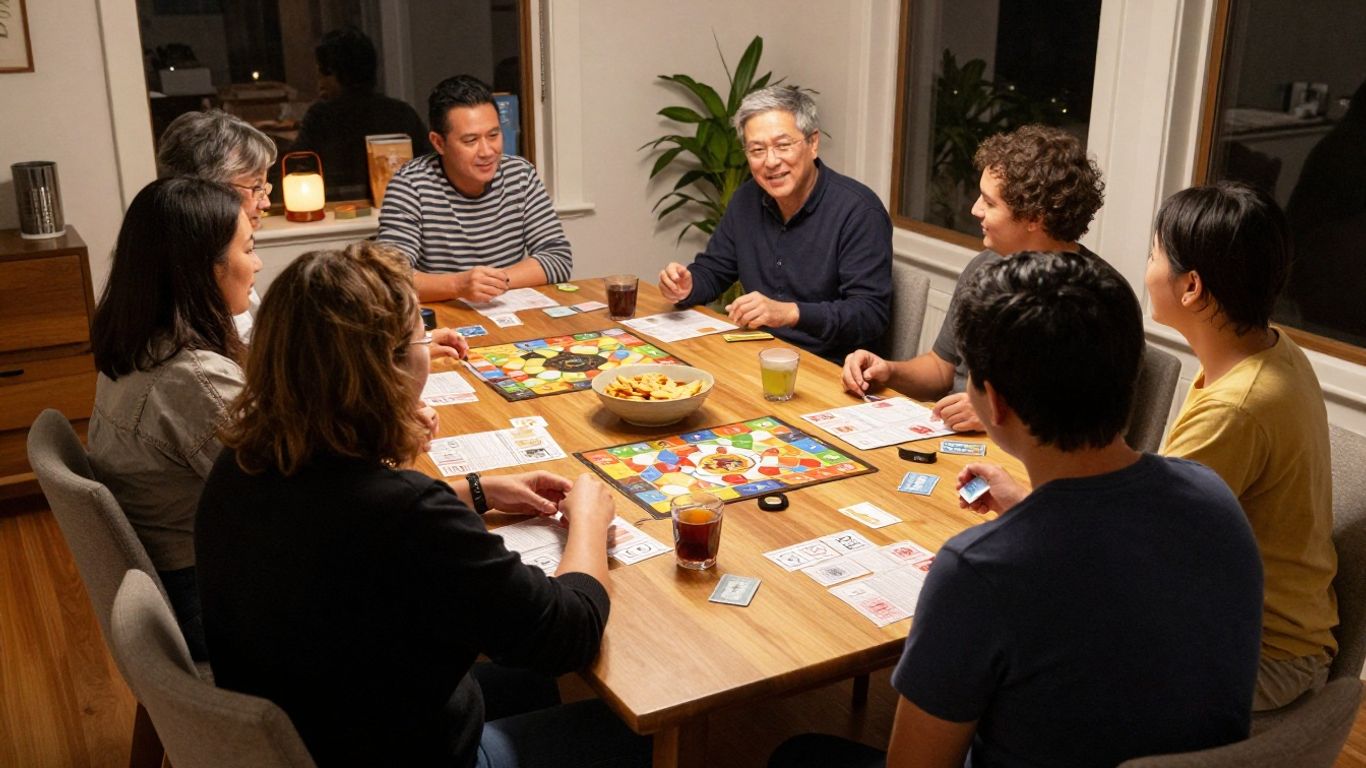
Start with the table and seating you actually have, then check the player limits of the games you’re considering. It’s easier to make a plan for a comfortable group than to squeeze extra chairs around a crowded surface at the last minute. If you’d like to invite more people than one game can hold, think about whether a second activity or a team format will make the evening work.
Share the start time, end time, and any helpful details
Tell guests when to arrive and when you expect to wrap up, especially if you’re hosting on a weeknight. Mention whether food will be available, whether they should bring anything and whether you’ll start with a game or leave time to catch up first. Clear details are welcoming; they spare everyone the awkward guesswork of wondering whether “come round at seven” means dinner, games or both.
Ask about accessibility needs and game preferences
A quick, low-pressure question lets guests share what would help them take part comfortably. You might ask whether they prefer a quieter game, need a little extra space at the table or would rather avoid games that rely on small print. Then use what you learn to make sensible choices about the games and setup, without putting anyone on the spot.
Prep your space before the first player arrives
You don’t need a dedicated games room to host well. A clear surface, comfortable seating and decent light can make an ordinary dining area feel ready for a night of play. Do a quick test of the setup before guests arrive; the missing chair always seems to announce itself at the least convenient moment.
Arrange seating so everyone can see and reach the action
Set out enough seats for the people you’ve invited, with a clear view of the board or cards. Leave room for guests to move around without having to climb over a bag or negotiate a maze of chair legs. If someone has mentioned a particular access need, adjust the layout ahead of time so the welcome feels natural rather than improvised.
Clear a dedicated spot for boards, cards, and snacks
Give the game a stable surface with enough room for the pieces and each player’s area. If snacks and drinks are nearby, keep them to one side or on a separate surface where possible. That small bit of separation helps everyone reach the game without turning a drink spill into the evening’s main event.
Keep the rules, scorekeeping supplies, and spare pens handy
Gather the rulebook and anything else you’ll use to track turns or scores before you begin. A few spare pens and a clear place to put unused pieces can prevent small interruptions from breaking the flow. A short setup check can be useful, so keep the essentials together rather than searching through drawers mid-game:
- Rulebook or quick-start guide
- Paper or a score pad
- Spare pens or pencils
- A small dish or tray for loose pieces
Once these are within reach, you can focus on the people around the table instead of rummaging for a pencil. Keep the game’s components together when you pack away, too, and the next gathering will be easier to prepare.
Keep the food and drinks easy to manage
Food should make guests comfortable, not compete with the game for table space. Choose things that are easy to serve and don’t need much attention once everyone sits down. If dinner is part of the plan, say so in the invitation; if it’s just snacks, guests will appreciate knowing that too.
Choose low-mess snacks that won’t grease the game pieces
Finger foods that are easy to pick up can suit a game night better than anything that needs a knife, fork and a broad stretch of elbow room. Put snacks in small bowls and keep them away from cards and boards. You can also set out a place for used plates or napkins so they don’t collect beside the playing pieces.
Offer a few drink options, including something nonalcoholic
Make water easy to find and offer a couple of other choices that suit your guests. Keeping drinks on a side table can reduce clutter and make spills less likely to reach the game. There’s no need for a complicated menu: a few practical options are usually enough.
Plan for dietary needs without turning dinner into a side quest
Ask guests about dietary needs when you send the invitation, then choose food you can serve without a lot of last-minute adjustments. Label dishes if ingredients might not be obvious, and keep serving utensils separate where that helps. A simple spread can be generous and considerate without making you spend the evening in the kitchen.
Explain the rules without making it feel like homework
A relaxed rules explanation gives everyone a fair chance to join in, including guests who haven’t played before. Start with the aim of the game and the decisions players make on a typical turn; save edge cases for when they come up. You’re hosting a shared evening, not conducting an exam with a board game in the room.
Start with a quick overview of the goal and key turns
Tell the group what they’re trying to do and what happens when a player takes a turn. Point to the relevant parts of the board or cards as you explain, rather than listing every rule from memory. Once guests understand the basic loop, they can ask focused questions and learn the finer details as play unfolds.
Use a practice round for games with trickier mechanics
If the game has a few steps or unfamiliar choices, try a short practice turn before keeping score. Let guests ask questions as they go, and make it clear that early mistakes are part of learning. A quick demonstration can be far easier to follow than a long explanation delivered while everyone is already eyeing the snacks.
Keep the rulebook nearby for disagreements worthy of a rematch
Even confident groups can disagree about a detail once a game gets lively. Keep the rulebook nearby and check the relevant point calmly rather than making a guess that changes the outcome. If you can’t settle it quickly, agree on a temporary interpretation and confirm the rule after the round; preserving the mood is often better than staging a full courtroom drama over one token.
Keep the evening moving while everyone has fun
A good host keeps an eye on the rhythm without trying to control every minute. Give people a chance to arrive and settle in, then offer a gentle cue when it feels like time to start. Having a loose plan helps you respond when the group wants another round, a breather or a change of pace.
Give guests time to arrive before starting the main event
A little arrival time lets people greet one another, put down their things and get a drink before the rules begin. If someone is running late, decide whether the group can start with a short game or whether it’s better to wait. You can mention the planned start time in the invitation, then use your judgement on the night.
Have a backup game ready for different moods or group sizes
Sometimes the first choice isn’t quite right once everyone is around the table. A backup gives you an easy alternative if the group is smaller than expected, people want something lighter or the main game takes longer to explain than planned. Keep the spare option simple to set up so changing course feels like a choice, not a rescue mission.
Make space for breaks, late arrivals, and graceful goodbyes
People may want a pause between games, and not everyone will stay for the full evening. Build in natural moments to stretch, refill drinks or let a late guest join without derailing the round. When the energy starts to fade, you can offer one last short game or simply thank everyone for coming; a tidy ending is part of a welcoming night.
Frequently Asked Questions
How many games should you plan for one evening?
Choose one main game and keep one or two alternatives available. That gives you options without making the evening feel like a schedule to complete.
How do you choose a game when guests have different experience levels?
Look for a game with a clear goal and straightforward first turns. You can explain the basics to the group and keep a more familiar option ready if the new game doesn’t suit everyone.
Should you choose the game before guests arrive?
It helps to have a shortlist, but you can leave the final choice open if guests have different preferences. Sharing a few options in advance can make the decision easier once everyone is together.
What should you include in a game night invitation?
Include the address, arrival time, expected finish, and whether food or drinks will be provided. It can also help to say what kind of games you have in mind and ask about preferences or access needs.
What snacks work well during board games?
Choose easy-to-serve snacks that don’t need cutlery and are less likely to leave greasy fingers. Put them in bowls and keep them away from the playing area.
How can you explain rules to new players without slowing things down?
Start with the goal and the basic turn sequence, then demonstrate a practice turn if needed. Leave less common details for when they matter during play.
What can you do if a game runs longer than expected?
Check in with the group and decide whether to finish, pause or switch to a shorter option. If you have an end time, mentioning it in advance makes that choice easier for everyone.