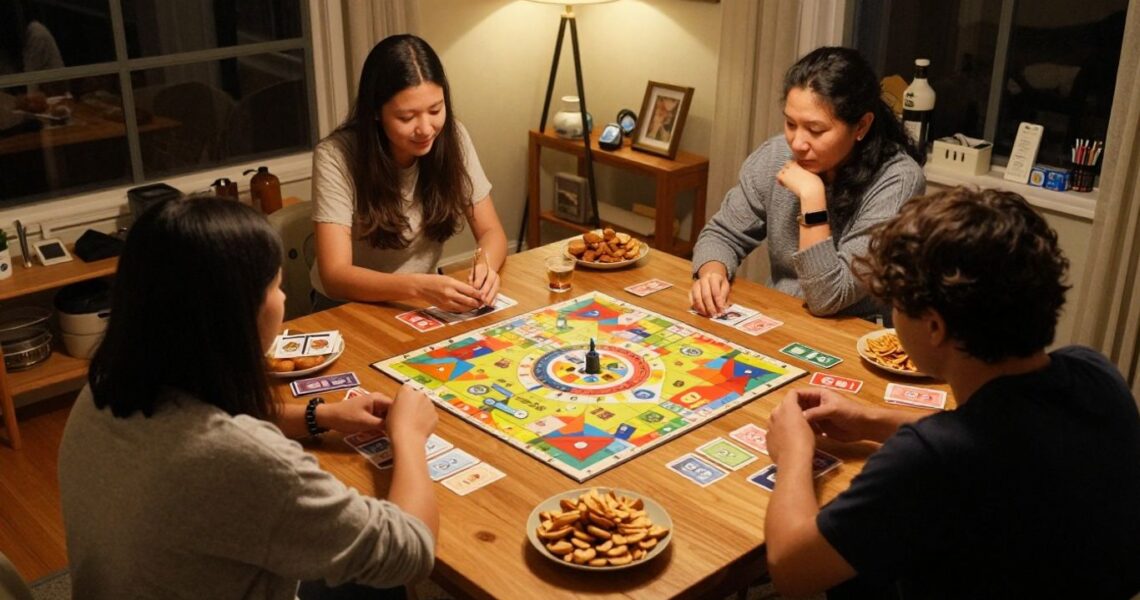
Game night hosting tips: How to deal a great evening without flipping the table
September 23, 2026Key Takeaways
A relaxed game night comes from thoughtful choices, not a colour-coded run sheet. Set things up so guests can settle in, learn as they go, and enjoy each other’s company.
- Choose games that suit your guests’ experience and the time you have.
- Include the practical details in your invitation, and ask about access and food needs.
- Make sure the table, chairs, lighting, and game pieces are ready before guests arrive.
- Serve easy-to-eat snacks away from the playing area.
- Let the group’s energy guide when to change games or wrap up.
Choose games that fit your crowd
The right game can bring a mixed group together; the wrong one can leave half the table waiting for their turn to end. Think about who’s coming, how many people will play, and whether they’re keen on lively teamwork or quieter strategy. You don’t need to predict everyone’s favourite, just choose something that gives the group a comfortable way in.
Match the rules to your guests’ experience
If some guests are new to board games, look for rules you can explain without a long preamble. A simple game can still be satisfying when there’s room for clever choices, while a familiar favourite can help newcomers feel at ease. If your group likes a challenge, choose something with more moving parts—but make sure you’re happy to teach it.
Pick a game length that leaves room for snacks
A game that runs longer than expected can squeeze out the best parts of the evening: catching up, refilling a plate, and deciding whether everyone has one more round in them. Use the length printed on the box as a starting point, then allow for teaching and the occasional spirited debate about what a rule means. A quick comparison can help you balance the main event with the rest of the night:
| Game plan | A good fit when | Leave room for |
|---|---|---|
| Short opener | Guests are arriving at different times | A relaxed start and introductions |
| Medium-length main game | Most of the group is ready to play | A quick break or snack refill |
| Longer feature game | Everyone has agreed to settle in | A clear finish and time to wind down |
Treat the schedule as a guide, not a referee. If the main game is running long, you can skip a second round rather than rush everyone through the first.
Keep a backup for different energy levels
Have another option ready in case your first choice doesn’t suit the group’s mood. A chatty party game can work well when people are still getting comfortable, while a calmer, shorter game may be welcome later in the evening. A flexible backup plan lets you adapt without making anyone feel that the first choice was a flop.
Send invites with the right details
A useful invitation answers the questions guests might otherwise have to text you about on the day. Include the essentials, then give a small sense of what the evening will be like. That way, people can plan their trip, know what to expect, and arrive ready to join in.
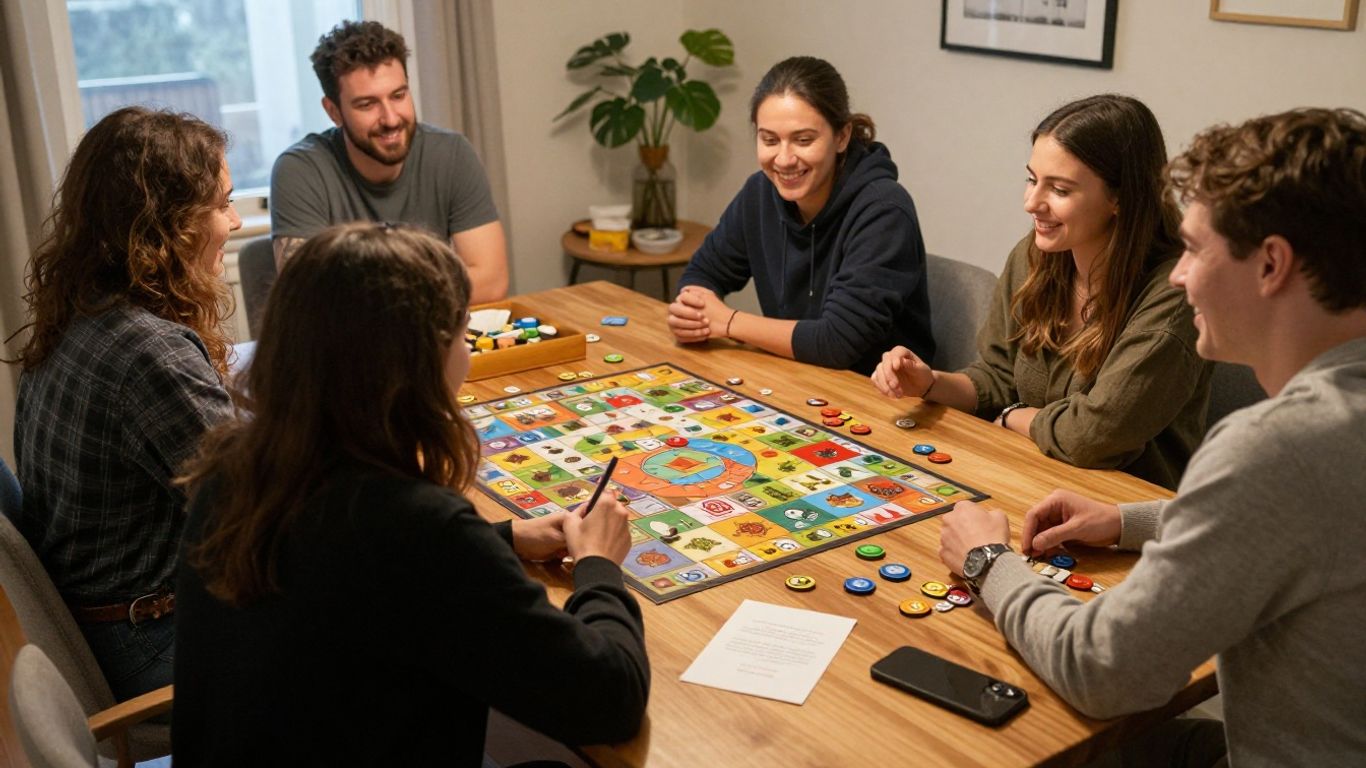
Share the date, start time, and address
Give the full date, the time you’d like people to arrive, and the address they’ll need to find you. If the start time is for a casual catch-up before play begins, say so; otherwise, guests may assume they’re already late when they’re right on time. Add any useful arrival details, such as which entrance to use or where to leave a coat.
Mention the game style and expected headcount
Tell guests whether you’re planning a light party game, a strategy-heavy evening, or a mix. A rough headcount helps people understand the size of the gathering and lets you choose games that can include everyone. You can also mention whether guests should expect to play in teams or take turns around the table.
Ask about food allergies and accessibility needs
A quick, considerate question gives you a chance to plan for people rather than make assumptions. Ask guests to tell you about food allergies, dietary needs, or anything that would make the space easier to use. If you can’t accommodate a request, be honest early so you can work out another option together.
Set up a space where play can happen
You don’t need a dedicated games room to host comfortably. A clear table, seats that suit the group, and enough light to read cards can do the job. Take a moment to imagine the room from a guest’s seat: can everyone see the play area, reach what they need, and move around without a furniture obstacle course?
Arrange seating so everyone can see and reach the game
Set chairs around the table so people can look at the board without leaning across one another. If the game uses a shared display or cards in the middle, check that guests at the far end can see them too. A little extra space between seats makes it easier to get up for a drink without interrupting the whole round.
Clear the table of clutter and fragile heirlooms
Before you set out the game, move anything that doesn’t belong in the playing area. Fragile keepsakes, loose mail, and the bowl you keep meaning to put away all have a talent for landing under a board. Clearing the table also makes it easier to lay out components and gives guests room for a drink or notepad.
Keep score sheets, pens, and spare pieces within reach
Small items are easy to lose once the game begins, so gather the useful extras before anyone takes a seat. A simple set of supplies can save the host from repeatedly leaving the table to hunt through drawers:
- Pens or pencils for scores and notes.
- A notepad or score sheet, if the game needs one.
- Spare paper for quick reminders or team names.
- A small dish for loose pieces between rounds.
Keep the supplies together somewhere visible but out of the way. Then, if a token takes a mysterious detour beneath the table, you can get on with the game instead of putting the evening on pause.
Plan snacks and drinks that won’t sabotage the board
Food can make a gathering feel welcoming, but greasy fingers and tiny game pieces are not natural allies. Choose snacks that are easy to pick up and don’t need much attention, then give guests a clear place to eat and drink. You can keep the menu simple; the aim is to make it easy for everyone to enjoy the evening.
Choose easy-to-eat options that are low on crumbs
Finger foods that hold together are easier to manage between turns than anything flaky, powdery, or covered in sauce. Serve food in small portions so guests can grab a bite without crowding the table. Keep a napkin stack close by, and don’t worry about designing a snack spread that looks too perfect to touch.
Set up a separate spot for food and drinks
A nearby side table or kitchen bench gives guests somewhere to set down a plate without putting it beside the board. Make the drinks easy to reach, and leave enough room for people to move past each other. This small separation helps protect the game and means players can take a break without juggling a cup over the cards.
Offer a few choices for different tastes and dietary needs
A modest mix of savoury and sweet options can suit different preferences without leaving you with a mountain of leftovers. If guests have mentioned dietary needs, label dishes clearly or keep them separate where practical. It’s easier for people to choose what works for them when they don’t have to quiz the host about every plate.
Keep the evening moving without becoming the fun police
Your job is to make it easy for the group to enjoy the evening, not to manage every minute. Some games take longer to teach, and some conversations deserve an extra few minutes before the first turn. A light touch helps the night feel organised without turning your living room into a tournament hall.
Explain rules with a quick example round
Rather than reciting every rule at once, explain the goal and show what a typical turn looks like. People often understand a game faster when they can see the pieces move and ask questions as they go. Mention any special rule that could surprise someone, then let the first round be a low-pressure chance to practise.
Make room for late arrivals and learning curves
If someone is running behind, start with a short activity or let the group chat while you wait. For a game already in progress, check whether the rules allow a new player to join smoothly or whether they’d be happier watching until the next round. A patient explanation is usually more welcoming than a dramatic sigh over the rulebook.
Know when to switch games or call it a night
Pay attention to the room: are people leaning in, chatting between turns, or starting to check the time? If interest is fading, suggest a shorter game or a break rather than insisting on finishing every planned round. A good host can also give a gentle heads-up when it’s nearly time to wrap up, so guests can leave without feeling hurried.
Add personality without overproducing the party
A personal touch can make a game night feel like yours, but you don’t need to build a themed set around every detail. Choose one or two small things that feel natural for your group, and let the games and conversation carry the rest. The best atmosphere is usually the one that leaves guests comfortable enough to be themselves.
Pick a simple theme or playlist
A colour, a favourite snack, or a playlist in the background can set the mood without taking over the evening. Keep music low enough for people to hear the rules and one another. If your group prefers quiet concentration, skip the soundtrack; the theme can be as simple as serving everyone’s favourite hot drink.
Use small prizes to raise the stakes
A playful prize can give a round a little extra sparkle, especially if it’s inexpensive and easy to share. Think of a silly paper crown, first choice of dessert, or the honour of picking the next game. Keep the mood light so guests who aren’t competitive can still enjoy taking part.
Leave space for conversation between rounds
A game night is still a chance to spend time together, not just a sequence of turns. Let people stretch, top up a drink, or chat for a few minutes before you bring out the next box. If everyone is having a good conversation, there’s no need to interrupt it on behalf of the schedule.
Frequently Asked Questions
How many games should you plan for a game night?
Choose one main game and have one or two shorter options ready. You may only get to one, and that’s fine; the extra choices are there in case the group wants a change of pace.
How far in advance should you send an invitation?
Give guests enough time to check their schedules and plan their trip. For a casual get-together, a clear invitation sent ahead of time is more useful than a last-minute message with missing details.
What should guests bring to game night?
Unless you’re planning a shared meal or asking people to contribute snacks, guests usually don’t need to bring anything. If you do want them to bring something, mention it in the invitation so no one has to guess.
What snacks work well during board games?
Choose easy-to-handle snacks that are less likely to crumble, drip, or leave residue on fingers. Put them on a separate surface and keep napkins nearby.
How do you teach a game without overwhelming new players?
Start with the goal, explain the basic turn, and demonstrate a quick example. Leave less common rules for when they become relevant, and make it clear that questions are welcome.
What can you do if guests arrive late?
Use a short opening activity or give people time to settle in before starting the main game. If play has already begun, check whether they can join at a natural point or wait comfortably for the next round.
When should you end game night?
Wrap up when the group’s energy starts to dip or people begin to make their way home. You can give a friendly heads-up before the final round so no one feels rushed.